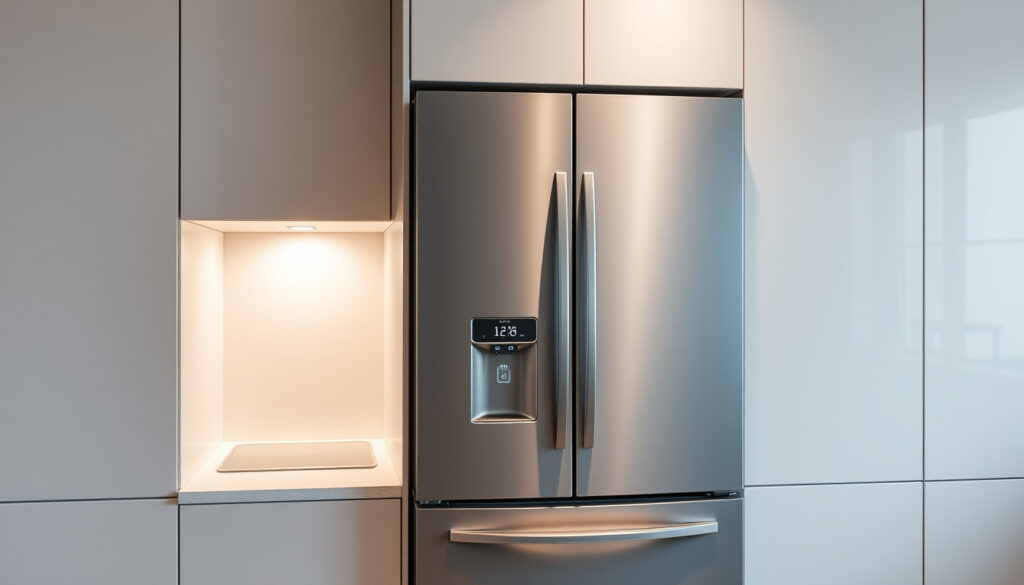
Integrated Fridge – Complete UK Buyer’s Guide for 2025
An integrated fridge is designed to sit flush with your kitchen cabinetry, hidden behind a custom door panel for a seamless finish. Unlike freestanding models, it becomes part of the room’s design rather than a standalone appliance. In the UK, integrated fridges are a popular choice for modern kitchens where a clean, uninterrupted look is a priority.
Choosing the right model involves understanding standard sizes, fridge-to-freezer splits, frost-free technology, and which brands offer the best value. The facts presented here are drawn from UK retailers, manufacturer guides, and consumer advice sources.
What Is an Integrated Fridge?
| What Is an Integrated Fridge? A fridge designed to sit flush with kitchen cabinetry, hidden behind a custom door panel for a seamless look. |
Sizes Available Full-height, undercounter, and compact models. Standard widths: 55–60 cm (UK). |
| Frost Free Options Frost free models use auto-defrost to prevent ice build-up – no manual defrosting needed. |
Top UK Brands Liebherr, Miele, Bosch, Neff, Samsung, and AEG – available at Currys, AO, Appliance City. |
Key Considerations for Buyers
- Integrated fridges are growing in popularity due to seamless kitchen designs; the UK market offers a wide range of price points.
- Frost free is a premium feature – most integrated models under £500 still require manual defrost.
- Undercounter integrated fridges (typically 82–87 cm tall) are ideal for small kitchens or extra cooling space.
- Choosing the best integrated fridge often depends on noise level, energy rating (A–G), and door hinge compatibility with cabinets.
- Installation complexity is higher than freestanding – cabinet doors must be attached to the appliance door.
| Aspect | Details |
|---|---|
| Definition | Fridge behind a custom cabinet door; not visible when doors are closed. |
| Typical Height | Full-height: 177–180 cm; Undercounter: 82–87 cm; Small: varies. |
| Width Standard | 55–60 cm (UK); slim models at 45 cm. |
| Energy Rating Range | A++ to F (most common A, B, C in mid-range). |
| Price Range (UK 2025) | £250–£1,200+ for integrated models. |
| Frost Free Availability | Common on mid-to-high-end; label ‘No Frost’ or ‘Frost Free’. |
| Installation | Requires custom cabinet panel; usually done by professional or experienced DIYer. |
| Top Retailers | Currys, AO, Appliance World Online, Appliance City, John Lewis. |
| Top Brands from SERP | Electrolux, Liebherr, Miele (highlighted by Appliance City). |
What Are the Best Integrated Fridges in the UK?
The “best” integrated fridge depends on your budget, required capacity, and desired features. According to Which? and major retailers, the UK market in 2025 spans from budget brands such as Beko, Candy, and Indesit to premium names like Miele, Liebherr, and Bosch. Prices range from roughly £250 to over £1,600.
What are the top integrated fridge brands?
Budget brands commonly include Beko, Candy, Fridgemaster, Hisense, Hoover, Hotpoint, Ikea, Indesit, Kenwood, and Logik. At the £900 level you find AEG, Miele, Neff, and Smeg. Premium-end names include Bosch, Caple, Haier, and John Lewis.
Best integrated fridge under £500?
Integrated models under £500 typically come from the budget brand list. These often lack frost-free technology and may have lower energy ratings. Check Currys or AO for current deals on brands like Hotpoint or Indesit.
Which integrated fridge is most reliable?
Reliability data is limited, but Which? surveys and retailer feedback often rank brands like Liebherr, Miele, and Bosch highly. However, even premium models can have issues, so checking warranty length is advisable.
Budget-friendly tip
If your budget is under £500, look at Beko, Indesit, or Hotpoint. They offer basic integrated models without frost-free, but can still meet the needs of small households.
What Sizes of Integrated Fridges Are Available?
Integrated fridges in the UK are usually designed for standard 60 cm wide cupboard units. Depth is typically around 55 cm, and heights range from about 100 cm to 200 cm. Full-height models commonly measure 177–180 cm, while undercounter units are 82–87 cm tall.
What is a small integrated fridge?
Small integrated fridges are often undercounter or compact models. They fit into spaces where full-height cabinets are not possible. Capacity typically falls below 150 litres, suitable for singles or as secondary cooling.
What is an undercounter integrated fridge?
Undercounter models are designed to sit beneath a worktop, usually 82–87 cm tall. They are ideal for small kitchens or for adding extra fridge space in a utility room. Many are available as fridges only, or as fridge freezers with a 50/50 or 60/40 split.
What are the standard dimensions of an integrated fridge?
Standard width is 60 cm, though some slim models are 45 cm. Depth is about 55 cm. For full-height units, 178 cm is common. Undercounter models are typically 82–87 cm tall. Always measure your cabinet opening and check ventilation requirements before buying.
Capacity guidance
Roughly, 150–200 litres suits individuals or couples, 200–300 litres suits a small family, and 300+ litres is for larger households. Integrated models generally offer less storage than freestanding alternatives because they fit inside cabinetry.
What Is a Frost Free Integrated Fridge and Do I Need One?
A frost free integrated fridge uses a fan and air circulation to prevent ice build-up in the freezer compartment. According to AO and Smeg’s 2025 guide, this technology eliminates the need for manual defrosting. Frost free is also called “No Frost” by many manufacturers.
Do I need a frost free integrated fridge?
If you value convenience and do not want to defrost your freezer manually, frost free is a worthwhile feature. However, it tends to cost more and may use slightly more energy. Budget models under £500 rarely include frost free technology.
What are the benefits of frost free fridges?
The main benefit is no ice removal. Additionally, frost free models often maintain more consistent temperatures, which can help food last longer. Some users report that frost free systems can be noisier, but this varies by brand.
Check the fine print
Some budget models claim “frost free” but only have auto-defrost in the fridge section, not the freezer. Always read the specifications carefully before buying.
A Brief History of Integrated Fridges
Integrated fridges evolved from built-in units that became popular in the 1980s. The key development milestones include:
- 1980s: Built-in fridges designed to slide under counters, but still with visible fronts.
- 1990s: True integrated models emerge, accepting custom door panels to match cabinetry (see Miele’s modern integrated range).
- 2000s: Energy efficiency becomes a priority, leading to A+ and A++ ratings.
- 2020s: Smart features and frost free technology become common on mid-range and premium models.
Modern integrated fridges emphasise energy savings, quiet operation, and seamless design.
Integrated vs. Built-in: Understanding the Labels
Terminology can be confusing. The table below separates established facts from details that vary by model or retailer.
| Established Information | Aspects to Verify with Retailers |
|---|---|
| Integrated fridges accept a custom door panel; built-in fridges may have a fixed front but still fit under a counter. | Some retailers use “integrated” and “built-in” interchangeably – always confirm whether a cabinet door can be attached. |
| Frost free, No Frost, and auto-defrost are often used interchangeably; all mean the freezer defrosts automatically. | Some budget models label themselves “frost free” but only defrost the fridge compartment, not the freezer. Check the specs. |
Finding Reliable Information
Retailer category pages dominate search results for integrated fridges, but they often lack educational depth. The six most searched query clusters – definition, best models, sizes, frost free technology, cost, and brands – are consolidated here into one structured resource to provide verified, scannable information for buyers.
Sources and References
The information presented is based on UK retailer and manufacturer sources, including official product pages and buying guides. For example:
“Integrated fridges are installed behind a custom cabinet door, making them virtually invisible.” – Appliance World Online
– Appliance World Online collection page
“Frost free uses a fan and air circulation to prevent ice build‑up, so you never need to manually defrost.” – AO.com buying guide
– AO.com
“Liebherr and Miele are premium brands offering high‑end integrated models.” – Appliance City
Key Takeaways for Integrated Fridge Shoppers
The right integrated fridge matches your cabinet size, preferred fridge-to-freezer split, and budget. Measure your space first, decide on frost-free if convenience matters, and consider brands from Beko to Miele depending on price. For further reading on cooking with frozen ingredients, see Frozen Jacket Potato in Air Fryer – Exact Timings for McCain & Ninja.
Frequently Asked Questions
Where can I buy an integrated fridge in the UK?
Major retailers include Currys, AO, Appliance World Online, Appliance City, and John Lewis. All offer online ordering with delivery and installation options.
How much does an integrated fridge cost?
Prices in the UK (2025) range from approximately £250 for a basic undercounter model to over £1,200 for premium brands like Liebherr or Miele with frost free and smart features.
What are the best brands for integrated fridges?
Top brands from the SERP include Electrolux, Liebherr, Miele, Bosch, Neff, Samsung, and AEG. Retailers like Appliance City highlight Liebherr and Miele as premium choices.
How do I install an integrated fridge?
Installation involves securing the fridge into the kitchen cabinet opening and attaching the custom door panel. Most buyers opt for professional installation, but experienced DIYers can do it with manufacturer instructions.
What is the energy efficiency of integrated fridges?
Energy ratings range from A+++ to F under the new UK energy label. Mid-range integrated fridges typically achieve A, B, or C. Frost free models tend to use slightly more energy.
For a related kitchen topic, see Bicarbonate of Soda vs Baking Soda – Key Differences Explained.
More related posts
 Arsenal Players – Guide to 2025/26 Squad and All-Time Greats
 Sam Rivers – Limp Bizkit Bassist Dies at 48
 Jennifer Ehle – Biography, Age, Husband and Filmography
 Bo Burnham – Height, Inside Special, and Complete Biography
 Inter Miami vs Vancouver Whitecaps FC Lineups – MLS Cup Final Predicted XIs
 Chris Robinson – Singer Biography, Net Worth, Wife and Career
 Louie Spence – Biography, Age, Net Worth, and Personal Life
 Timothée Chalamet Kylie Jenner – Relationship Timeline 2023-2025
