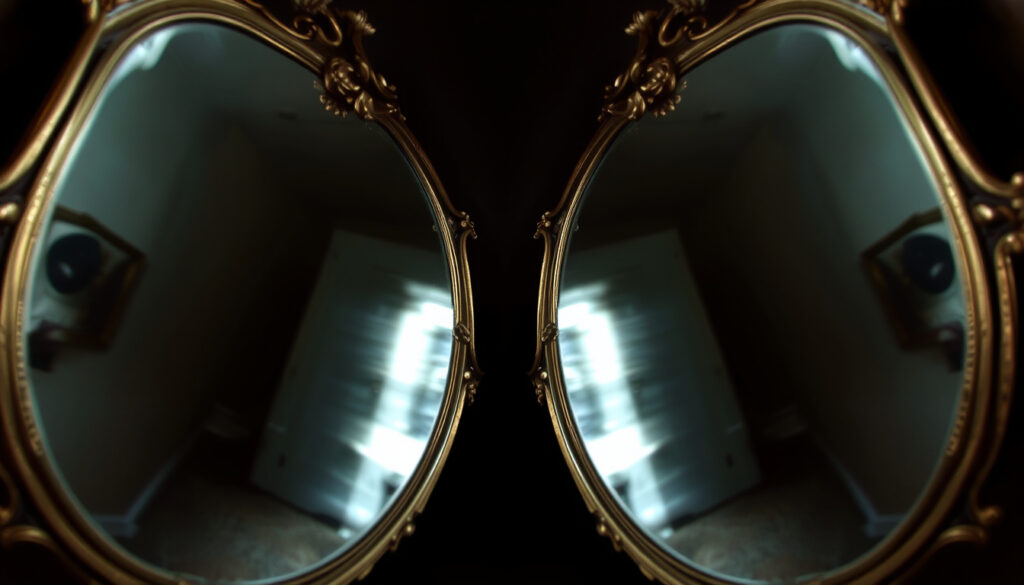
Folie a Deux Meaning – Complete Guide to Shared Psychosis
The term folie à deux describes a rare psychiatric condition in which two people in a close, often isolated relationship come to share the same delusional beliefs. First identified by French psychiatrists in the 19th century, the phenomenon continues to be studied for its implications in diagnosis, treatment, and even criminal law.
Although it may sound like something from a gothic novel, folie à deux is a well-documented clinical syndrome. One person typically develops a fixed, false belief, and a second person gradually adopts that belief through prolonged emotional dependence and limited exposure to outside perspectives. The shared psychosis may resolve when the pair are separated.
Understanding what makes this condition distinct from ordinary shared beliefs, conspiracy thinking, or mass hysteria is important for clinicians, legal professionals, and anyone encountering the term in news reports or popular culture. This article covers the definition, pronunciation, real-world cases, legal relevance, and treatment approaches associated with folie à deux.
What Does Folie à Deux Mean in Psychology?
What It Is
A rare psychiatric syndrome where a delusion is shared between two or more people in a close relationship.
Pronunciation
foh-lee ah duh (French: fɔ.li a dø)
Other Names
Shared psychotic disorder, induced delusional disorder, madness of two
In Law
Relevant in insanity defenses and cases of coerced or shared criminal behavior
- Folie à deux is classified as a shared psychotic disorder in the DSM-5.
- It was first described in 1877 by French psychiatrists Charles Lasègue and Jean-Pierre Falret.
- The condition usually involves a dominant, delusional individual (the primary) and a more suggestible partner (the secondary).
- Separation from the primary often leads to resolution of symptoms in the secondary.
- Shared delusions can be persecutory, religious, somatic, grandiose, or paranoid in nature.
- The belief must be pathological, fixed, and not culturally normal to meet diagnostic criteria.
- Underdiagnosis is common due to the isolated nature of affected relationships.
| Fact | Detail |
|---|---|
| Medical Name | Shared Psychotic Disorder (DSM-5) |
| Alternate Terms | Induced delusional disorder, madness of two |
| Prevalence | Very rare; exact rates unknown |
| Typical Dyad | Family members (e.g., siblings, parent-child) or intimate partners |
| Key Feature | Delusion originates in one person and is adopted by another |
| Treatment | Separation of individuals, antipsychotic medication, therapy |
Folie à Deux Meaning: The Psychiatric Definition
In psychiatric terms, folie à deux refers to the transfer of delusional beliefs from one person to another within a close, often emotionally intense relationship. The primary individual holds a fixed, false belief, and the secondary individual gradually comes to share that belief without independent evidence. The relationship is usually marked by social isolation, emotional dependency, and limited contact with people outside the dyad.
The condition has also been called Lasègue–Falret syndrome, after the French psychiatrists who first documented it in 1877. In modern classification systems such as the DSM-5, it is included under “Other Specified Schizophrenia Spectrum and Other Psychotic Disorders” as shared psychotic disorder. It is no longer treated as a fully separate diagnosis but rather as a specifier or presentation of delusional disorder.
Is Folie à Deux a Real Disorder?
Yes, folie à deux is a recognized psychiatric syndrome. It is listed in the DSM-5 and has been described in peer-reviewed medical literature for over a century. However, some debate exists about whether it should be classified as a distinct disorder or as a subtype of delusional disorder. The DSM-5 criteria require that the shared belief is not part of a culturally accepted tradition and that it meets the definition of a delusion: a fixed, false belief held despite contrary evidence.
Despite its recognition, folie à deux is considered very rare. Exact prevalence figures are not available, partly because cases often go undiagnosed or unreported, especially when the affected pair does not come into contact with mental health services.
What Does ‘Folie’ Mean on Its Own?
In French, folie translates directly to “madness” or “insanity.” The phrase folie à deux therefore literally means “madness shared by two.” The word carries historical and literary weight in French psychiatry and philosophy, where it has been used to describe not only clinical psychosis but also collective irrationality. In the context of the syndrome, folie refers specifically to a delusional state, not merely eccentricity or strong belief.
How Do You Pronounce Folie à Deux?
Because the term is borrowed from French, English speakers often vary in how they say it. Two broad patterns are common.
In British English, it is often pronounced roughly as “fol-ee a duh” or “fol-ee ah duh.” In American English, speakers tend to say “foh-lee uh doo” or “foh-lee ah doo.” The original French pronunciation is closer to “faw-lee a duh,” with a softer final vowel and no strong emphasis on any syllable.
The most common English pronunciation among clinicians is “foh-lee ah duh.” The final “eux” in French is silent or very soft, so saying “doo” or “duh” are both accepted in English contexts. Merriam-Webster’s medical dictionary offers audio pronunciation for reference.
What Are Famous Cases or Examples of Folie à Deux?
Historical and Notable Cases
The most widely reported modern example is the Slender Man stabbing case of 2014. In Waukesha, Wisconsin, two 12-year-old girls, Anissa Weier and Morgan Geyser, stabbed a classmate, Payton Leutner, multiple times. The defense argued that the girls shared a fixed belief in the fictional character Slender Man and that the delusional dynamic amounted to folie à deux. The case drew global attention and was cited in psychiatric and legal discussions of shared psychosis in minors.
Beyond high-profile cases, clinical literature describes many instances involving spouses, parent-child pairs, and siblings. A common pattern involves one partner developing a persecutory delusion — for example, believing they are being poisoned or watched — and the other partner gradually adopting the same belief after prolonged cohabitation and social isolation.
Everyday Examples of Shared Delusion
In less extreme forms, shared delusions can emerge in isolated family units or caretaking relationships. A parent with untreated paranoid schizophrenia may pass delusional beliefs to a dependent child, especially if the child has limited access to external reality checks. Siblings raised in highly controlled environments may reinforce each other’s bizarre religious or persecutory ideas.
Shared delusions can take many forms: persecutory (“They are spying on us”), religious (“We are chosen or cursed”), somatic (“We both have the same hidden disease”), grandiose (“We have a special mission”), or paranoid (“Everyone is plotting against us”). What distinguishes these from ordinary shared opinions is that the beliefs are fixed, false, and held despite clear contradictory evidence.
What Is Folie à Trois and How Does It Relate to Law?
Folie à Trois: Extension to Three People
Folie à trois is a literal extension of the concept: a shared delusional belief involving three people. The same dynamics apply — a primary figure holds a delusion, and two secondary individuals come to adopt it through emotional dependence and limited reality testing. In theory, the pattern can extend further to folie à plusieurs (shared delusion among a larger group), though such cases are exceptionally rare in clinical literature.
The distinction between folie à deux and folie à trois is primarily numerical; the underlying psychological mechanisms of influence, isolation, and dependency are essentially the same. Clinical management follows the same principles: separation of the individuals, psychiatric assessment of each person, and treatment of the underlying psychotic condition.
Folie à Deux in Legal Contexts
Folie à deux can become relevant in criminal and civil law in several ways. Defense teams may argue that a defendant’s actions were influenced by a shared psychotic dynamic, potentially supporting claims of diminished responsibility, lack of independent intent, or insanity. However, courts do not automatically accept folie à deux as a defense. Legal standards typically require clear evidence of a mental disorder and a direct link between the delusion and the criminal act.
In family and safeguarding law, folie à deux is treated as a potential child protection concern. If a parent and child share delusional beliefs, authorities may intervene if medical care is refused, dangerous behavior results, or the child is being coerced or isolated. Competency, criminal responsibility, and capacity evaluations may all be affected by the presence of shared delusional beliefs.
Folie à deux is not the same as gaslighting, conspiracy thinking without psychosis, shared political or religious convictions, or mass hysteria. It is a specific clinical syndrome involving fixed, pathological delusions, not ordinary belief systems or social influence. Media portrayals often blur this line, especially when the term is used in fictional contexts such as the film Joker: Folie à Deux.
How Has the Understanding of Folie à Deux Evolved Over Time?
- 1877 — French psychiatrists Charles Lasègue and Jules Falret publish the first medical description of folie à deux.
- 1942 — German psychiatrist Kurt Schneider further classifies induced delusional disorders within his diagnostic framework.
- 1950s — The condition gains wider recognition in international psychiatric literature, with case reports appearing in English-language journals.
- 2013 — The DSM-5 includes shared psychotic disorder under “Other Specified Schizophrenia Spectrum and Other Psychotic Disorders,” moving away from treating it as a fully standalone diagnosis.
The evolution of the classification reflects a broader shift in psychiatry toward understanding delusional beliefs as phenomena that can occur across multiple conditions rather than as disorders in themselves. The NIH PMC literature continues to document new cases and refine the clinical understanding of shared psychosis.
What Is Known and What Remains Uncertain About Folie à Deux?
| Established Information | Information That Remains Unclear |
|---|---|
| Folie à deux is a recognized psychiatric diagnosis in the DSM-5. | Exact prevalence is unknown due to underdiagnosis and reporting gaps. |
| It requires a close relationship and transmission of delusional beliefs from one person to another. | It remains controversial whether it should be a separate diagnosis or a subtype of delusional disorder. |
| Separation typically resolves symptoms in the secondary individual. | Some cases may involve coercion or control rather than genuine shared belief, complicating diagnosis. |
What Is the Broader Context of Folie à Deux in Psychology and Culture?
The term folie à deux has moved beyond clinical psychiatry into popular culture, film, and journalism. The 2024 film Joker: Folie à Deux is one example of how the phrase is used to suggest a mutually reinforcing relationship around delusion or obsession. However, popular usage often diverges from the precise medical definition, which requires the presence of fixed, pathological delusions rather than shared antisocial attitudes or emotional intensity.
A key distinction that clinicians emphasize is that folie à deux is not simply “shared madness.” It is a specific syndrome that arises under identifiable conditions — particularly isolation, dependency, and power imbalance. The secondary person does not merely agree with the primary person; they adopt a belief that meets the clinical standard of a delusion. Understanding this difference matters for accurate diagnosis and appropriate treatment.
The role of isolation and power dynamics in transmission is central. Many documented cases involve caregivers, elderly couples living alone, or parent-child dyads in which the dependent individual has little access to alternative perspectives. This context helps explain why separation from the primary person is often sufficient to resolve the shared delusion in the secondary individual. The London Psychologist Clinic describes the pattern as one in which the secondary individual’s reality testing collapses under the weight of the relationship.
What Do the Experts Say About Folie à Deux?
“The delusion is communicated from a first subject to a second, who, passively, adopts the same.”
— Lasègue & Falret, 1877
“Folie à deux is defined as an identical or similar mental disorder affecting two or more individuals, usually the members of a close family.”
— Kumar et al., 2005 (NIH PMC)
These foundational descriptions from the 19th century and from modern peer-reviewed research illustrate a consistent understanding of the syndrome across more than a century of psychiatric observation. The Wikipedia article on folie à deux provides a broader overview of the historical and cultural dimensions.
A Final Overview of Folie à Deux
Folie à deux is a rare condition in which a delusional belief is shared by two closely connected people, usually through a highly dependent and isolated relationship. It has important implications for psychiatric diagnosis, treatment planning, and sometimes legal responsibility. While the term is occasionally used loosely in popular culture, the clinical reality involves fixed, pathological delusions that can often be resolved through separation and appropriate treatment. For readers interested in broader comparisons of psychological conditions, see What Is Alzheimer’s Disease – Symptoms, Causes, Stages, Treatment and Phantom Pregnancy in Dogs – Symptoms, Causes and Care Guide.
Frequently Asked Questions About Folie à Deux
Can folie à deux affect more than two people?
Yes, when three people share the same delusional belief it is called folie à trois. Larger groups are referred to as folie à plusieurs, though these are extremely rare.
Is folie à deux the same as gaslighting?
No. Gaslighting involves deliberate manipulation to make someone doubt their own perception. Folie à deux involves both people genuinely holding the same delusional belief without intentional deception.
Can children experience folie à deux?
Yes, children can be the secondary individual in a folie à deux relationship, typically adopting delusional beliefs from a parent or caregiver in an isolated environment.
Does separation always cure the secondary person?
Separation leads to significant improvement in many cases, especially if the secondary person does not have an independent psychotic disorder. Some individuals may require additional treatment.
Is folie à deux considered a form of insanity in court?
Not automatically. Courts evaluate whether the individual understood the nature and wrongfulness of their actions, and whether a mental disorder directly affected behavior.
Are there any biological markers for folie à deux?
No biological markers exist. Diagnosis is based on clinical assessment of the shared delusional beliefs and the relationship dynamics between the individuals involved.
How common is folie à deux in clinical practice?
It is considered very rare. Most clinicians may encounter only one or two cases in their career, if any. Underreporting is likely because affected pairs often avoid mental health services.
Can folie à deux occur in non-familial relationships?
Yes. It has been documented in intimate partners, close friends, nursing home residents and staff, and members of isolated religious or ideological groups.
Is the Slender Man case widely accepted as folie à deux?
The defense argued it was, and many psychiatric commentators discussed the case in those terms. However, some experts questioned whether the girls’ beliefs met the strict diagnostic criteria for delusion.
More related posts
 Susan George – Biography, Films, Charity, and Horse Breeding
 Man City Transfer News – Summer 2024 Ins and Outs
 St Lucia – Ultimate Travel Guide and Essential Facts for 2025
 Lacey Chabert – Net Worth, Hallmark Movies, and Complete Biography
 Jilly Cooper – Death at 88 Confirmed by Inquest
 PS5 vs Xbox Series X – Complete 2025 Comparison
 Peter Rabbit – Ultimate Guide to Books, Movies and Streaming
 Flights to Gran Canaria – Compare Airlines, Prices & Top Tips
