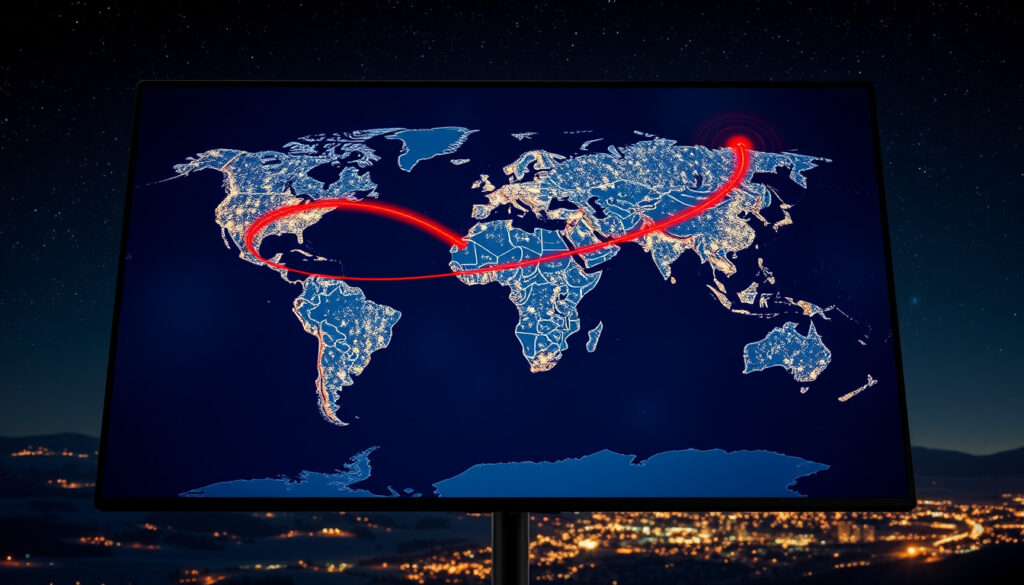
Where Is Santa Right Now – Live Tracker Maps and Updates
Every December, millions of people worldwide ask the same question: where is Santa right now? While the jolly figure remains a beloved holiday tradition rather than a verifiable physical presence, several organizations have created detailed tracking systems that let families follow his annual journey across the globe on Christmas Eve.
This article explores the tools, maps, and services designed to monitor Santa’s location, explains where he is said to reside year-round, and clarifies what the tracking data actually represents. Whether you’re preparing for Christmas Eve festivities or simply curious about the mechanics behind these popular services, here is everything you need to know.
Where Is Santa Right Now?
The honest answer depends entirely on the time of year. Santa Claus is not currently making deliveries—his annual route occurs exclusively on Christmas Eve, December 24. Between January and December, he is said to rest at the North Pole, preparing for the next holiday season.
During the actual Christmas season, multiple tracking services activate to provide real-time (or near-real-time) updates. The most prominent is the NORAD Tracks Santa program, operated by the North American Aerospace Defense Command. This official military operation has been simulating Santa’s journey since 1958, using radar, satellites, and contributions from allied agencies to plot his location on a live map.
As of the most recent tracking period, Santa’s whereabouts are updated continuously from midnight on December 24 until the early hours of December 25. The system draws data from multiple aerospace monitoring stations across North America and relies on volunteer personnel to maintain round-the-clock updates.
No live Santa tracker operates outside of December 24. All real-time tracking services shut down after Christmas and do not resume until early December of the following year.
Overview: Santa Tracking at a Glance
Key Insights on Santa Tracking
- NORAD Tracks Santa is the oldest and most widely recognized tracking program, operating since 1958
- The official tracking window runs for 25 hours, from 2 a.m. MST on December 24 to 3 a.m. MST on December 25
- In 2013, the tracking website received 19.58 million unique visitors on Christmas Eve alone
- NORAD handles more than 130,000 phone calls during each tracking period
- Volunteers from the United States and Canada—approximately 1,000 by 2025—staff phone lines
- Third-party integrations include OnStar vehicle systems and Amazon Alexa voice assistants
- Tracking data represents a fun simulation, not confirmed physical movement
Snapshot: Santa Tracking Facts
| Fact | Details | Source |
|---|---|---|
| Primary Tracker | NORAD Tracks Santa | noradsanta.org |
| Secondary Tracker | Google Santa Tracker | santatracker.google.com |
| Aviation Tracker | Flightradar24 | flightradar24.com/blog/santa-tracker/ |
| Community Tracker | EmailSanta | emailsanta.com/santa-tracker.asp |
| Home Location | North Pole (traditional) | Holiday folklore |
| Live Video Feed | Santa Claus Village, Rovaniemi | santaclausvillage.info/live-video-webcam/ |
Santa Tracker Maps and Live Tools
Several distinct platforms offer Santa tracking capabilities, each with its own approach, technology, and audience. Understanding the differences helps families choose the most suitable option for their needs.
NORAD Tracks Santa: The Official Standard
The NORAD Tracks Santa platform remains the gold standard for Santa tracking. Operated by the North American Aerospace Defense Command, this program originated from an accidental phone call in 1955 when a child reached the Continental Air Defense Command instead of a department store’s Santa hotline. Colonel Harry Shoup answered and told the child where Santa was located, a gesture that evolved into an enduring annual tradition.
Since 2012, the mapping component has been powered by Cesium, a platform developed by Analytical Graphics, Inc. The 3D globe displays accurate global terrain, satellite imagery, and Santa’s projected route across time zones. Users can rotate the globe, zoom into regions, and follow his journey in near-real-time.
Google Santa Tracker
The Google Santa Tracker offers a more gamified experience, combining location updates with educational activities, mini-games, and holiday-themed content. Active from early December through Christmas Eve, the platform appeals particularly to families with young children. It includes daily countdown activities, coding challenges, and replay functionality for past tracking data.
Flightradar24: Aviation Perspective
The Flightradar24 Santa Tracker takes a unique aviation-focused approach. This service plots Santa’s sleigh as if it were a commercial flight, using the company’s flight-tracking technology to show his path across continents. The blog post accompanying the tracker explains the technical methodology and provides context for how flight data is interpreted to simulate Santa’s journey.
EmailSanta: Community and Replay
The EmailSanta platform provides a more whimsical, community-oriented experience. After Christmas, the site offers replay videos and archived tracking data, allowing families who missed the live event to review Santa’s previous journey. The platform also features an email component where children can send messages directly to Santa.
Each tracking service operates independently. There is no unified database connecting all trackers, meaning Santa’s displayed location may vary slightly between platforms depending on each service’s own projections and data sources.
Where Does Santa Live?
According to Western holiday tradition, Santa Claus resides at the North Pole—a vague, largely uninhabited region in the Arctic Ocean north of the Arctic Circle. This location has become synonymous with his workshop, where elves are said to manufacture toys year-round and Mrs. Claus manages the domestic operations.
However, a specific Finnish village has capitalized on this association. Santa Claus Village in Rovaniemi, Finland markets itself as Santa’s official hometown. Located on the Arctic Circle, the village attracts hundreds of thousands of tourists annually. It features a live video webcam streaming year-round imagery of the main compound, including Santa’s office where visitors can meet him in person.
The North Pole: Fact and Fiction
The North Pole as a residential location is purely mythological. The Arctic region experiences polar night for months at a time, with temperatures dropping well below survivable levels for a sustained human population. No permanent settlement matching the descriptions of Santa’s workshop exists there. The concept functions as a narrative device, placing Santa far enough away to maintain an aura of mystery while remaining accessible enough for a single-night global journey.
Rovaniemi: The Tourist Perspective
Rovaniemi has leanly embraced its connection to Santa Claus, investing heavily in tourism infrastructure centered on the Santa Claus Village complex. The live webcam provides continuous footage of the village, though it shows real-world scenery rather than a working toy factory or animated workshop.
When Will Santa Be Here?
Santa traditionally begins his journey at midnight on December 24, traveling westward from the International Date Line to deliver presents before sunrise in each time zone. His estimated arrival time at any specific location depends on several factors, including regional population density, historical delivery rates, and the particular tracking service being consulted.
How Tracking Services Estimate Arrival
Neither NORAD nor any other tracking service provides precise arrival times for individual households. Instead, the platforms show Santa’s progress relative to major geographic regions and time zones. The NORAD Tracks Santa map displays his current location projected onto a 3D globe, with visual indicators showing which regions he has already visited and which remain upcoming in his route.
Factors Affecting Delivery Timing
The tracking projections are based on aggregated assumptions rather than confirmed data. NORAD’s analysts study historical patterns, geographic data, and input from partner agencies to estimate where Santa might be at any given moment during the tracking window. Individual households should not use these projections to plan wake-up times or predict exact moments of gift arrival.
Santa tracking services are entertainment products, not real-time logistics updates. Arrival times displayed on tracking maps represent estimated projections based on generic algorithms, not confirmed delivery schedules.
Santa’s Annual Journey: From Preparation to Delivery
The tracking services only capture a single evening, but the broader narrative of Santa’s annual cycle spans many months of preparation, travel, and recovery. The following timeline outlines the key phases of Santa’s year as described in the traditions that underpin these tracking services.
- January through October: Santa and his workshop staff resume toy production at the North Pole. Elves work full-time manufacturing gifts based on wish lists collected throughout the year.
- November: Final toy inspections and quality checks occur. Mrs. Claus oversees logistical preparations for the sleigh, reindeer care, and route planning.
- December 1: Official pre-Christmas tracking period begins. NORAD Tracks Santa activates its website and prepares volunteer staffing for the Christmas Eve operation.
- December 24, midnight: Santa departs the North Pole and begins his global journey, traveling westward to chase the sun and maximize delivery time.
- December 24, evening into December 25, early morning: Peak delivery hours occur as Santa moves across Europe, Africa, Asia, the Americas, and the Pacific.
- December 25, approximately 3 a.m. MST: The NORAD Tracks Santa operation concludes for the year after approximately 25 hours of continuous monitoring.
- December 25, daylight: Santa returns to the North Pole for rest and recovery, beginning the cycle anew.
What We Know for Certain and What Remains Unclear
Transparency about the boundaries between fact and fiction serves readers better than blended claims. The following comparison clarifies what can be stated with confidence versus what remains interpretive or unresolved.
| Established Information | Uncertain or Unverified Claims |
|---|---|
| NORAD Tracks Santa is a real program operated by the U.S. and Canadian military | Whether Santa “physically” exists remains a matter of personal belief |
| Multiple tracking platforms exist and are publicly accessible | Specific routes Santa takes beyond general geographic patterns are unverified |
| The tracking data is simulated and presented as entertainment | Precise arrival times at individual households cannot be confirmed |
| Rovaniemi, Finland hosts a tourism complex called Santa Claus Village | The official status of Rovaniemi as Santa’s “real” hometown is marketing, not fact |
| Tracking services only operate on December 24 | Year-round monitoring of Santa’s activities is not available from any service |
The History and Culture Behind Santa Tracking
The tradition of tracking Santa’s movements reflects a broader cultural impulse to make intangible holiday narratives tangible and interactive. Modern tracking services emerged from a combination of Cold War-era military communication infrastructure, popular interest in aerospace technology, and the commercial potential of family-oriented holiday entertainment.
The accidental origin of NORAD Tracks Santa in 1955 illustrates how institutional practices can diverge from their original purpose. A misdialed phone number led Colonel Harry Shoup to improvise a response that resonated so strongly with the public that it became an official, sustained program continuing nearly seven decades later.
Technology has reshaped the tracking experience over time. Early iterations relied on telephone updates and basic radio communications. The introduction of 3D mapping through the Cesium platform in 2012 marked a significant leap in visual capability, and the expansion to multiple digital platforms—including mobile apps, social media channels, and voice assistants—has dramatically broadened accessibility.
Regional variants exist alongside the dominant services. Finnish tourism infrastructure at Rovaniemi represents one such adaptation, transforming the abstract concept of Santa’s home into a physical destination. These variations reflect how globalized holiday traditions acquire local flavor while maintaining core narrative elements.
What the Experts Say
NORAD officials have consistently described the tracking program as a community outreach initiative rather than a factual reporting service. The following statement reflects the program’s official positioning:
“NORAD tracks Santa because it’s a great way to celebrate the holiday season with the North American Aerospace Defense Command community and the public. It’s a fun tradition that has grown significantly since it first began.”
The program’s volunteer coordinator structure and partnership with Analytical Graphics, Inc. demonstrates how public and private entities can collaborate on entertainment products with educational value. The Cesium-powered mapping platform, for instance, double as a legitimate geospatial technology demonstration.
Tracking Santa: Key Takeaways
For families and curious individuals seeking information about Santa’s current whereabouts, several practical points emerge from the available data. Live tracking services operate exclusively on December 24, beginning at midnight and continuing through the early morning hours of December 25. The NORAD Tracks Santa platform remains the most established option, offering official status and military-grade mapping technology.
Alternative services like the Google Santa Tracker, Flightradar24, and EmailSanta provide complementary experiences with varying emphases on gamification, aviation data, and community engagement. None of these platforms claim to represent verified physical movement—the tracking data is explicitly framed as simulation and entertainment.
For those interested in the cultural history of these traditions, the Ghost of Christmas Past offers additional context on how holiday narratives have evolved alongside technology and shifting social expectations. Understanding the broader story helps contextualize why tracking services have become so popular despite—or perhaps because of—their playful ambiguity.
Frequently Asked Questions
Is Santa Claus real?
Santa Claus as a living, physically present individual is a matter of personal belief. The character originates from Saint Nicholas, a 4th-century bishop, and has evolved through centuries of cultural adaptation. Modern tracking services treat Santa as a fictional or symbolic figure for entertainment purposes.
Can I track Santa in real-time right now?
Live tracking is only available on December 24, from midnight until approximately 3 a.m. MST on December 25. Outside of this window, no tracking service provides real-time updates on Santa’s location.
What is the most accurate Santa tracker?
NORAD Tracks Santa is the most widely recognized and officially documented tracking service. However, all trackers present simulated data framed as entertainment rather than verified fact.
Does Santa actually live at the North Pole?
The North Pole is the traditional home of Santa Claus in Western holiday folklore. The Arctic region is uninhabited by permanent civilian populations, making this a mythological rather than geographic claim.
Where is Santa Claus Village located?
Santa Claus Village is located in Rovaniemi, Finland, on the Arctic Circle. The tourism complex includes attractions, meeting spaces with a Santa actor, and a live webcam. It markets itself as Santa’s official hometown but functions primarily as a commercial entertainment venue.
What happened to the NASA astronauts mentioned in the research?
The NASA Astronauts Stuck in Space article addresses a separate topic involving extended space missions. For information on that subject, please refer to the dedicated article on that page.
Can I watch Santa’s village live online?
Yes, Santa Claus Village maintains a live webcam streaming year-round footage of the main compound. This shows real-time scenery rather than animated workshop activity.
How many people use Santa trackers?
NORAD Tracks Santa received approximately 19.58 million unique visitors on Christmas Eve 2013 and nearly 20 million visits in 2014. The program also handles over 130,000 phone calls during the tracking period.
What technology does NORAD use for tracking?
Since 2012, NORAD has used the Cesium platform, developed by Analytical Graphics, Inc., to power a 3D interactive globe with global terrain and satellite imagery. The system draws data from radar and satellite monitoring networks.
How can I access Santa tracking services?
Primary access points include the official NORAD website, mobile apps for iOS and Android, phone hotlines staffed by volunteers, social media channels, OnStar vehicle systems, and Amazon Alexa voice assistants.
More related posts
 Bella Thorne – Net Worth, Career, and Life in 2026
 Bo Burnham – Height, Inside Special, and Complete Biography
 Keke Palmer – Biography, Net Worth, Son and Movies
 Natasha Lyonne – Biography, Movies, Net Worth and More
 Stacey Dash – Biography, Net Worth, and Life in 2025
 Family and Friends Railcard – Discounts Eligibility Savings Guide
 How to Fold a Pocket Square – Classic Folds for Suits and Weddings
 Bon Jovi – Tour 2025, New Album Forever, and Band History
