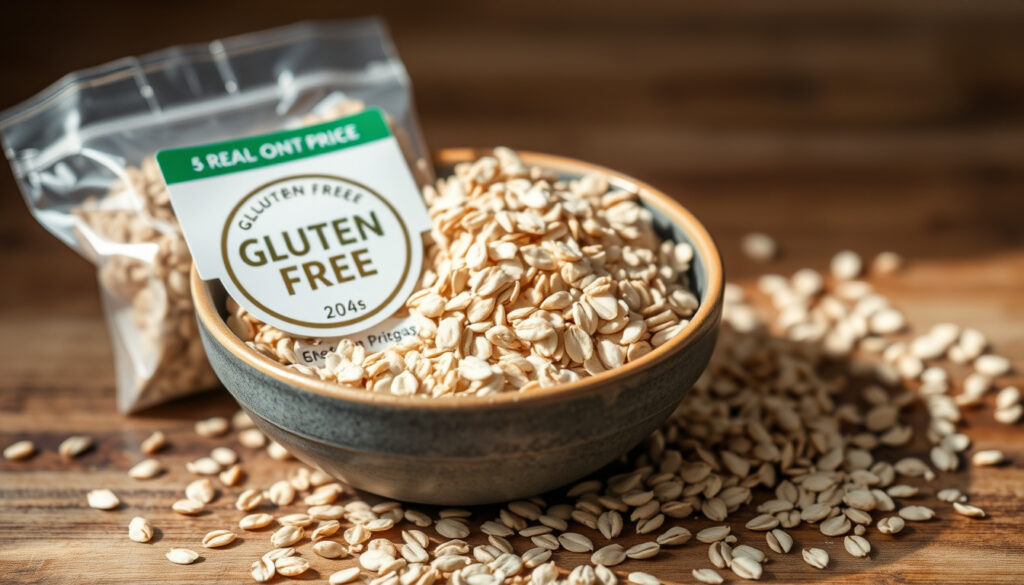
Are Oats Gluten Free – Complete Guide to Safety and Certified Brands
Oats are a breakfast staple for millions, but for anyone following a gluten-free diet the question is far from simple. The short answer is that pure oats contain no wheat, barley, or rye gluten. Yet the long answer involves cross-contamination, a unique oat protein called avenin, and a patchwork of international labeling rules that can leave even the most careful shopper confused. Below, we untangle the evidence from official sources and research to give you a clear, fact-based picture.
Are Oats Gluten Free? Understanding Contamination and Avenin
No, oats naturally contain avenin (similar to gluten) but not gluten. Pure, uncontaminated oats are gluten-free.
Cross-contamination during growing, harvesting, processing, and transport with wheat, barley, or rye.
Most can eat pure, certified gluten-free oats, but a small subset react to avenin.
Oats tested and verified to contain less than 20 ppm of gluten (FDA standard), with dedicated facilities.
Key Insights on Oats and Gluten
- Oats themselves are gluten-free, but cross-contamination renders most commercial oats unsafe for a gluten-free diet. (Coeliac UK, Celiac.org)
- The protein avenin in oats can trigger a reaction in a minority of people with celiac disease, even when oats are pure. (Beyond Celiac, clinical literature)
- Certified gluten-free oats are available from several brands (e.g., Bob’s Red Mill, GF Harvest, Mornflake in UK), but board-certified products vary by region.
- Oat milk and oat-based products may be gluten-free only if made with certified gluten-free oats; always check labels. (FDA labeling guide)
- Regulatory thresholds for “gluten-free” are <20 ppm in the US, EU, and UK, but the production methods to achieve this differ.
- Introducing oats into a gluten-free diet should be done cautiously and under medical guidance, especially for those newly diagnosed.
Quick Facts: Oats and Gluten
| Fact | Details |
|---|---|
| Natural gluten content of oats | Oats do not contain gluten; they contain avenin. |
| Gluten-free labeling threshold | FDA: <20 ppm; EU: <20 ppm; UK: <20 ppm (Coeliac UK standard) |
| Cross-contamination risk | Very high – 50-80% of commercial oats may be contaminated. |
| Avenin reaction rate in celiacs | Approximately 5-8% of celiacs react to avenin even from pure oats. |
| Certified gluten-free oat brands (US) | Bob’s Red Mill, GF Harvest, One Degree Organic, Quaker Select (limited) |
| Certified gluten-free oat brands (UK) | Mornflake, Flahavan’s (select lines), Biona, Love Raw |
Which Oat Brands Are Certified Gluten Free?
Not all oats labeled “gluten-free” are produced the same way. Two main approaches exist: purity protocol oats, which are grown on dedicated fields and handled separately from gluten grains, and mechanically or optically sorted oats, which are cleaned to remove stray gluten grains. The Celiac Disease Foundation notes that “purity protocol” is not a universally standardized term, so practices vary by company.
Even well-known brands like Quaker and Flahavan’s offer both standard and gluten-free lines. Only the specifically labeled gluten-free version meets the <20 ppm threshold. The standard product may be contaminated.
US and Canada Brands
In North America, commonly discussed gluten-free oat brands include GF Harvest, Bob’s Red Mill Gluten Free Oats, Quaker Gluten Free Oats (specific GF-labeled line), Purely Elizabeth oat products in some cases, One Degree Organic Foods oat products in some cases, and Cream Hill Estates or Only Oats in Canada. Not every product from these brands is necessarily gluten-free; the specific package label is what matters.
UK Brands
In the United Kingdom, consumers often look for Oatly gluten-free oat drinks where specifically labeled, Nairn’s gluten-free oat products, Mornflake gluten-free oats in some product lines, and products bearing the Crossed Grain symbol from recognized certification bodies. Again, always verify the individual product’s label and certification mark.
Can Gluten-Free Oats Cause Inflammation or Adverse Reactions?
Even when oats are pure and uncontaminated, a small proportion of people with celiac disease may react to avenin, the storage protein in oats. The Celiac Disease Foundation notes research showing that purified oats can induce an acute immune response in some patients, though continued consumption did not lead to intestinal damage in the study discussed. Estimates of avenin sensitivity range from 5% to 10% of the celiac population. For most, certified gluten-free oats are well tolerated.
If you have celiac disease, consult a healthcare provider before adding oats to your diet. Start with a small amount of certified pure oats and monitor symptoms. Asymptomatic reactions are possible, so follow-up testing may be advised.
Are Oat Milk and Other Oat Products Gluten Free?
Oat milk, porridge, and other oat-based products can be gluten-free, but only if they are made with certified gluten-free oats and processed in dedicated facilities. Many commercial oat milks are produced with standard oats that may be contaminated. The FDA allows a “gluten-free” label only if the finished product contains less than 20 ppm gluten. Similarly, porridge made from certified gluten-free oats is safe, but porridge from standard oats carries the same cross-contamination risk as whole oats.
For those also wondering about other grains: Does Rice Have Gluten – Complete Guide to Gluten-Free Rice confirms rice is naturally gluten-free. Barley is not gluten-free, and traditional sourdough made from wheat still contains gluten. Pure cornflour (cornstarch) is gluten-free, but cross-contamination is possible. If you experience digestive discomfort after eating, you may want to read Why Does My Stomach Hurt – Common Causes and Quick Relief.
Are Oats Gluten Free in the UK? Regional Regulations and Labeling
The European framework, including the UK, recognizes that oats can be labeled gluten-free if they are specially produced and contain less than 20 mg/kg (ppm) gluten. However, oats are still legally treated as a gluten-containing cereal in certain ingredient-list contexts, even when a gluten-free claim is allowed if they meet the threshold. In the UK, Coeliac UK updated its guidance in 2015 to state that most people with celiac can eat pure, uncontaminated oats, while acknowledging avenin sensitivity. The Crossed Grain symbol on packaging provides extra assurance of third-party certification.
Seek products with the Crossed Grain symbol and a clear statement that the oats are produced under gluten-free conditions. Brands like Mornflake and Flahavan’s offer specific gluten-free lines that meet these standards.
How Have Oat Safety Regulations Changed Over Time?
- – FDA proposed rule to allow oats as gluten-free grain; finalized 2013.
- – FDA final rule: oats can be labeled gluten-free if <20 ppm and not contaminated.
- – Coeliac UK updates guidance: most with celiac can eat pure oats; avenin sensitivity acknowledged.
- – European Commission publishes new gluten-free labeling rules reinforcing oat purity requirements.
- – Renewed debate on avenin cross-reactivity; studies on tolerance thresholds ongoing.
What Do We Know and What Remains Uncertain About Oats and Celiac Disease?
| Established Information | Uncertain or Variable Information |
|---|---|
| Oats do not contain wheat gluten (glutenin/gliadin). Their protein is avenin. | Whether a particular individual with celiac disease will react to avenin (varies by person). |
| Cross-contamination in conventional oat fields and facilities is widespread. | Exact prevalence of avenin sensitivity in celiac population (estimates range 5-10%). |
| Certified gluten-free oats meet labeling thresholds (<=20 ppm). | Long-term effects of consuming pure oats in celiacs who are asymptomatic (needs more research). |
Why Does the Question ‘Are Oats Gluten Free’ Still Cause Confusion?
The confusion stems from several factors. Avenin is structurally similar to gluten but not identical; most celiacs tolerate it, but not all. The term “gluten-free” on a label implies strict limits, but regulations allow trace amounts below 20 ppm. Commercial oat fields are often rotated with wheat, and shared equipment in mills causes widespread contamination. Different countries have varying certification standards—for example, Coeliac UK’s Crossed Grain symbol versus the FDA’s gluten-free label—adding another layer of complexity for consumers.
What Do Official Organizations Say About Oats and Gluten?
“Oats contain avenin, which is a protein similar to gluten. Most people with coeliac disease can eat uncontaminated oats.”
– Coeliac UK (source)
“Although oats themselves do not contain gluten, they are often grown, processed, and transported alongside wheat, barley, and rye.”
– Celiac Disease Foundation (source)
“Yes, pure, uncontaminated oats are gluten-free. The US Food and Drug Administration considers oats a gluten-free grain under its gluten-free labeling.”
– Beyond Celiac (source)
The FDA states that oats can be labeled gluten-free if they contain less than 20 ppm gluten and are not contaminated (source). The National Institutes of Health review confirms that contamination is the main problem in many real-world oat supplies (source).
So, Are Oats Gluten Free? The Bottom Line
Yes, oats are naturally gluten-free, but only specially produced, certified gluten-free oats are safe for people with celiac disease due to widespread cross-contamination. A small minority may also react to avenin, so introducing oats cautiously with medical advice is recommended. Always check the specific label and look for third-party certification when possible. For a broader understanding of gluten-free grains, see the guide to gluten-free rice.
Frequently Asked Questions
Is rice gluten free?
Yes, rice is naturally gluten free and safe for celiacs.
Is barley gluten free?
No, barley contains gluten and is not safe for a gluten-free diet.
Is sourdough gluten free?
Traditional sourdough made from wheat still contains gluten. Only specially made gluten-free sourdough is safe.
Is cornflour gluten free?
Pure cornflour (cornstarch) is gluten free, but check for cross-contamination.
Are Flahavan’s oats gluten free?
Flahavan’s offers a specific ‘Gluten Free’ range that is certified; their regular oats may be contaminated.
What is gluten?
Gluten is a protein found in wheat, barley, rye, and triticale. It causes reactions in people with celiac disease.
What is gluten free?
‘Gluten free’ means containing less than 20 ppm of gluten according to FDA/EU standards.
Are organic oats gluten free?
Organic oats are not automatically gluten-free; they still face cross-contamination risk unless certified gluten-free.
Is porridge gluten free?
Porridge made from certified gluten-free oats is safe; porridge from standard oats is often contaminated.
More related posts
 Tony Montana – The Fictional Drug Lord and Real-Life Namesake
 Natasha Lyonne – Biography, Movies, Net Worth and More
 Julie Hogg – The Murder That Ended Double Jeopardy in the UK
 Inter Miami vs Vancouver Whitecaps FC Lineups – MLS Cup Final Predicted XIs
 Hs Tikky Tokky – Biography, Net Worth, and Legal Case
 The Gym Group Near Me – UK Locations, Hours and Prices
 Chris Stussy – Biography, Tour Dates & Music
 Cardigans Women – Best UK Styles, Brands & Shopping Guide
